Nutrients and Supplements for Presbyopia: What the Evidence Shows
Many people who notice small print getting harder to read after 40 wonder whether a vitamin or eye supplement could help. The honest answer is that presbyopia is a change in the eye's lens, and the sources reviewed for this page do not show that any nutrient or supplement reverses it. This page explains what presbyopia is, what nutrition can reasonably do for aging eyes, and how to read a supplement label without being misled.
- Presbyopia is an age-related change in the lens, not a nutrient deficiency, so supplements are not a proven way to fix it.
- The sources reviewed here show no good evidence that any vitamin or herbal extract improves near focusing.
- A diet with dark leafy greens, fish and a variety of fruits and vegetables supports general eye health.
- On a label, avoid cure or vision-restoration claims and be wary of hidden "proprietary blends."
- An eye exam and the right glasses or lenses do more for presbyopia than any pill; check with a doctor before adding supplements.
What presbyopia is, and why that matters for supplements
Presbyopia is the gradual, age-related loss of the ability to focus on near objects. The National Eye Institute describes it as a common type of refractive error that becomes noticeable in the 40s and keeps progressing for years afterward[1]. The American Academy of Ophthalmology explains that it happens because the eye's lens becomes less flexible with age, so it cannot change shape as easily to focus up close[2].
This explains why supplement claims deserve caution. Presbyopia is not a vitamin deficiency. It is a normal change in how the lens behaves. A product that claims to "restore" near focus or "reverse" presbyopia is promising something the cited sources do not support.
The usual ways to manage presbyopia are optical or procedural: reading glasses, multifocal lenses, contact lenses, and in some cases surgery or prescription drops, all decided with an eye doctor[1].[2] No nutrient on this page replaces an eye exam or any of those options.
What the research does and does not show
The sources used for this page do not report any trial showing that a vitamin, mineral, plant extract or antioxidant improves near focusing in people with presbyopia. That is an important finding on its own. It means that, based on these sources, evidence for supplements as a presbyopia treatment is limited to nonexistent.
You may still see supplement ingredients linked to "eye health" in general. Those claims often come from research on other eye conditions or from studies in the lab, and they do not automatically carry over to presbyopia. A nutrient that was studied for one eye problem has not been shown to help a different one.
A fair way to read supplement marketing is this:
- Claims about presbyopia specifically: not supported by the sources reviewed here.
- Claims about general eye health: may be reasonable for a balanced diet, but a pill is not proven to do the same job.
- Claims of cures or vision restoration: a red flag. Eye doctors diagnose and treat vision conditions. Supplements do not.
Food first: eating for aging eyes
The National Eye Institute's guidance on keeping eyes healthy points to a healthy diet as one of the habits that supports eye health, including dark leafy greens such as spinach, kale and collard greens, and fish such as salmon and tuna[3]. These foods are also part of generally healthy eating patterns, which is a good reason to choose them even though they will not change how the lens focuses.
Practical ways to build that kind of plate:
- Add a serving of dark leafy greens to lunch or dinner most days.
- Include fish in some weekly meals.
- Fill the rest of the plate with a variety of colorful fruits and vegetables.
- Aim for a pattern you can keep up, rather than a single "eye food."
Food has an advantage over pills: it delivers nutrients along with fiber and other compounds, and it is less likely to lead to taking too much of one nutrient. If you want more detail on everyday habits, the eye health page covers the wider picture.
Doses and safety: why more is not better
The sources used here do not give recommended supplement doses for presbyopia, so no dose is suggested on this page. That is deliberate. Because no supplement is shown to treat presbyopia, there is no evidence-based dose to quote.
Safety still matters, especially for people over 40, who are more likely to take prescription medicines or have other health conditions. General cautions:
- Talk to a doctor or pharmacist first if you take blood thinners, diabetes medicines, blood pressure medicines or any other prescription drug. Some herbal ingredients can interact with medicines.
- Check for overlap. A multivitamin, a separate eye formula and a fortified drink may all contain the same nutrient, so the total can climb quickly.
- Be careful with fat-soluble vitamins and minerals. Some nutrients can build up or cause problems at high intakes, so staying within the label's stated amount and your clinician's advice matters.
- Pause and call a doctor if you notice new symptoms after starting a supplement, and seek urgent care for sudden vision changes.
If you are pregnant, breastfeeding, planning surgery or managing a chronic illness, get professional advice before starting any supplement.
How to judge an eye supplement label
Eye supplement labels often list many ingredients, and a long list can look impressive. Length is not evidence. These checks help separate sound products from marketing.
Look at the claims
Be wary of any label or website that says a product cures, reverses or prevents a vision condition, or lets you "throw away your reading glasses." Presbyopia is a normal change in the lens[2], and the standard options are corrective lenses, procedures or drops chosen with an eye doctor[1].
Look at the ingredient list
- Are amounts listed for each ingredient, or is it hidden inside a "proprietary blend"?
- Does the label name the form and quantity of each nutrient, so you can compare it with your diet and other supplements?
- Are there herbal extracts with no clear reason for being there? Each extra ingredient adds to the chance of interactions and side effects.
Look at the proof
Ask what the product's claims are based on. If the support is a testimonial, a before-and-after photo or a study of a different condition, it does not show the product helps presbyopia. Based on the sources reviewed here, no such proof exists.
Look at quality signals
Independent third-party testing, clear manufacturer contact details and a realistic description of what the product does are better signs than dramatic promises. Even then, a quality mark shows what is in the bottle, not that it works for your eyes.
Habits that matter more than a pill
Several habits support eye comfort and long-term eye health, and they carry little risk.
- Get regular eye exams. The National Eye Institute recommends dilated eye exams and knowing your family history, because many eye problems have no early symptoms[3]. An exam is also the only reliable way to confirm presbyopia and get the right prescription[4].
- Do not smoke. The National Eye Institute lists quitting smoking, or never starting, among its tips for healthy eyes[3].
- Wear sunglasses outdoors. The same guidance recommends sunglasses that block ultraviolet light[3].
- Use the right correction. Reading glasses, multifocals or contacts can reduce squinting and headaches at near range. If screens leave your eyes tired, see the eye strain page for practical steps.
If your vision seems to blur at all distances, or the change is sudden, do not assume it is presbyopia. The blurry vision page explains why a prompt exam matters. Other age-related conditions, such as cataracts, can also affect sight and need an eye doctor's assessment, not a supplement.
When to see an eye doctor
If small print is getting harder to read, you hold things at arm's length, or you get headaches when reading, see an eye care professional. Presbyopia is common and manageable with the right correction[1], but only an exam can rule out other causes and find the best option for your lifestyle.
Bring a list of everything you take, including vitamins and herbal products. This helps your doctor spot interactions and gives you a straight answer about whether any supplement makes sense for you. In most cases, the best use of the money and effort is a current eye exam, well-fitted lenses and a balanced diet.
Eye supplements we have reviewed
These are the 4 eye-health supplements we have reviewed on HealthSupplements.best. None of them is proven to treat or prevent presbyopia; talk to your eye doctor before starting any supplement, especially if you take other medicines.
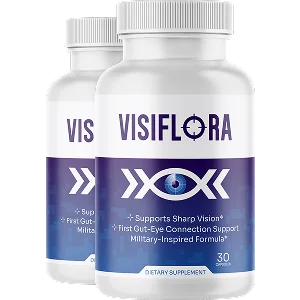
VisiFlora
Listed ingredients include astaxanthin, vitamins C and E, copper, selenium, grape seed extract, ginkgo biloba and eyebright, among others. The sources reviewed here show no good evidence that any of these improve presbyopia, and several herbal ingredients could interact with medicines, so check with a doctor first.
Listed ingredients: Astaxanthin, Vitamin C, Vitamin E, Copper, Selenium, Chromium
TheyaVue
Listed ingredients include lutein, zeaxanthin, vitamins C and E, zinc, bilberry extract and rutin. The sources reviewed here do not show that these nutrients improve near focusing in presbyopia, so any benefit would be general at best and unproven for this topic.
Listed ingredients: Lutein, Zeaxanthin, Vitamin C, Calcium, Vitamin E, Bilberry Extract
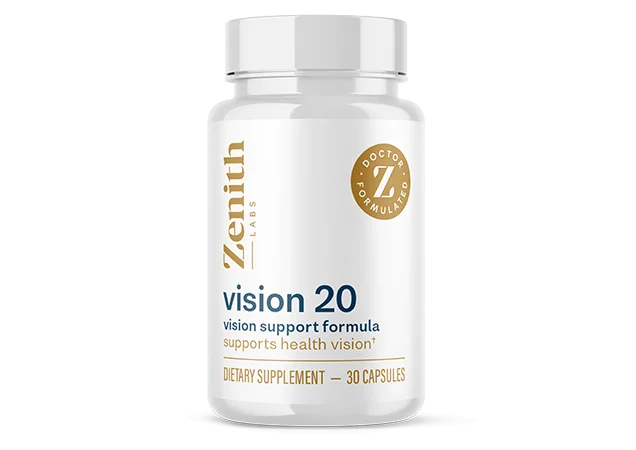
Vision 20
Listed ingredients include lutein, zeaxanthin, zinc, beta-carotene, lycopene, vitamin A as retinyl palmitate, taurine, grape seed extract and bilberry extract. None has good evidence for presbyopia in the sources reviewed, and vitamin A and beta-carotene amounts are worth discussing with a doctor.
Listed ingredients: Lutein, Zeaxanthin, Zinc, Beta-carotene, Lycopene, Rose Hips
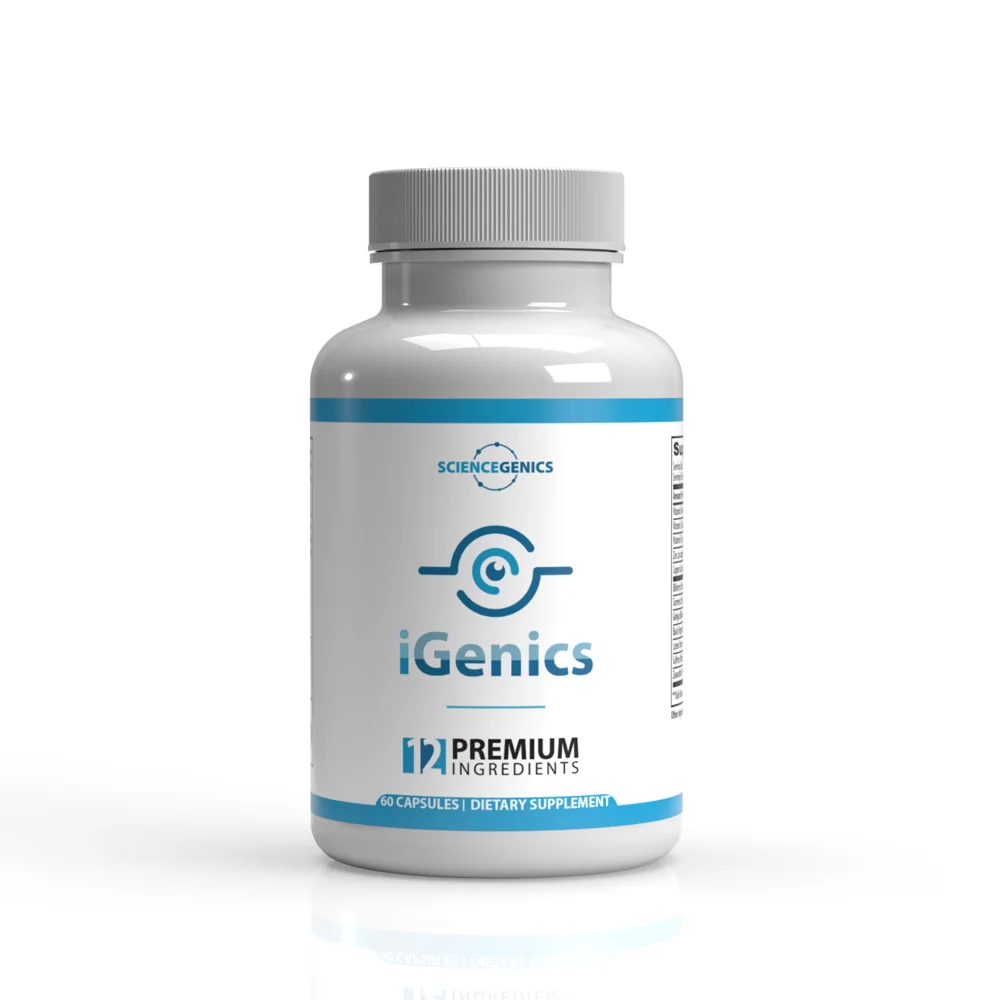
iGenics
Listed ingredients include ginkgo biloba, an AREDS-2 style formula that is not itemized, bilberry, saffron and turmeric with BioPerine. The sources reviewed here show no evidence that these help presbyopia, and the non-itemized formula makes it hard to know the amounts; BioPerine and ginkgo may also raise medicine-interaction questions.
Listed ingredients: Ginkgo biloba, AREDS-2 formula ingredients (not itemized), Bilberry, Saffron, Turmeric + BioPerine
Frequently asked questions
Can supplements reverse presbyopia?
No supplement is shown to reverse presbyopia in the sources reviewed here. It results from the lens becoming less flexible with age[2]. Management usually involves glasses, contacts, surgery or drops, chosen with an eye doctor[1].
Which foods are best for aging eyes?
The National Eye Institute points to a healthy diet that includes dark leafy greens such as spinach and kale, and fish such as salmon and tuna[3]. These support general eye health but are not a treatment for presbyopia.
Are eye vitamins safe to take with my medicines?
Not always. Some ingredients, especially herbal extracts, may interact with prescription drugs. Show your doctor or pharmacist the full ingredient list before starting, and avoid doubling up on nutrients already in a multivitamin.
Should I get an eye exam before buying a supplement?
Yes. Blurry near vision can have causes other than presbyopia, and the National Eye Institute recommends regular dilated exams[3]. An exam confirms the cause and the right correction before you spend money on products.