Presbyopia: What It Is, Why It Happens After 40, and What Helps
Presbyopia is the gradual loss of the eye's ability to focus on close objects, and it is a normal part of aging. Many people first notice it in their 40s, when small print starts to blur or a phone has to be held farther away[1]. This overview covers what it is, how it develops, who is affected, how it is corrected, and what nutrition and supplements can realistically offer.
- Presbyopia is a normal age-related loss of near focusing that usually becomes noticeable in the 40s.
- It happens because the eye's lens becomes less flexible over time.
- Reading glasses, multifocal glasses, contact lenses and surgery are the main correction options to discuss with an eye doctor.
- Regular eye exams, a healthy diet, not smoking and UV protection support overall eye health but do not stop presbyopia.
- Evidence that supplements help presbyopia is limited, so see an eye doctor for diagnosis and treatment.
What presbyopia is
Presbyopia is an age-related change in focusing. It makes it harder to see things up close, such as a book, a menu or a text message[1]. It is not a disease, and it is not caused by too much screen time or by using the eyes too much.
Presbyopia is considered a refractive problem, meaning light is not focused correctly on the retina at the back of the eye[2]. Unlike nearsightedness or farsightedness, it is tied to age rather than to the shape of the eyeball. Someone who has never needed glasses can still develop it.
The change tends to be slow. Many people do not notice it until reading becomes a daily annoyance. It usually keeps progressing for a number of years before it levels off, and an eye doctor can check how much correction is needed[3].
How presbyopia happens
Inside the eye, a clear lens sits behind the pupil. To look at something close, the lens has to change shape so light focuses sharply on the retina. With age, the lens becomes less flexible, and it can no longer change shape as easily[1].
The result is that near objects look blurry, while distance vision may stay the same. This is why the first sign is often holding reading material at arm's length. The process builds over years rather than appearing overnight[3].
Because the lens is involved, some people confuse presbyopia with other lens changes. Cataracts are a different condition, and an eye exam is the way to tell them apart.
Who is at risk
Age is the main factor. Presbyopia is expected to affect nearly everyone as they get older, and it commonly becomes noticeable in the early to mid 40s[1][3].
Having good distance vision does not protect against it. People who already wear glasses or contacts for nearsightedness or farsightedness may find they need a separate fix for reading, or a lens that covers more than one distance[2].
Because nearly everyone is affected, the more useful question is not whether it will happen but when to get checked and what kind of correction fits daily life.
Common signs to watch for
Typical signs include:
- Holding books, menus or phones farther away to see them clearly
- Blurry vision at a normal reading distance
- Headaches or tired eyes after reading or close work
- Needing brighter light for near tasks
These signs are linked with presbyopia[1]. They can overlap with other problems, though. Persistent blurry vision or ongoing eye strain should be checked rather than assumed to be age-related, especially if the change is sudden, affects one eye, or comes with pain, flashes or new floaters. Sudden changes need prompt attention from an eye doctor.
How presbyopia is corrected
Presbyopia cannot be prevented, but the blur can be corrected in several ways. An eye doctor can recommend the right one after an exam. Common options include:
- Reading glasses, used only for close work
- Bifocals, trifocals or progressive lenses, which combine more than one focusing power in a single lens
- Contact lenses, including multifocal designs or setups that use a different power for each eye
- Surgery, which may be an option for some people after a discussion with a surgeon
These options are described by the National Eye Institute and the American Academy of Ophthalmology[1][3]. Each has trade-offs in comfort, cost, convenience and how well it works for different distances, so the best choice depends on work, hobbies and personal preference.
An eye doctor can also say whether other approaches, such as newer prescription treatments, make sense for a given person. Over-the-counter supplements are not on that list of proven options.
Healthy aging-eye habits
No habit stops presbyopia, but general eye care supports overall eye health as the years go by. The National Eye Institute's advice for keeping eyes healthy includes:
- Getting regular dilated eye exams
- Eating a healthy diet that includes plenty of fruits and vegetables
- Staying at a healthy weight and being physically active
- Not smoking
- Wearing sunglasses that block ultraviolet rays
- Using protective eyewear when needed
These steps come from NEI guidance on healthy eyes[4]. They are not treatments for presbyopia. They help protect the eyes overall, and regular exams are the way eye problems get found early.
Good lighting and a comfortable reading distance can also make close work easier day to day, though they do not change how the lens works.
Nutrition and supplements: a short preview
A balanced diet is part of general eye care[4]. That means a mix of fruits, vegetables and other whole foods rather than relying on a single nutrient.
For presbyopia specifically, the sources used for this page do not show that any vitamin, mineral or herbal supplement corrects or reverses the loss of near focus. The age-related stiffening of the lens is not something a pill is known to undo. Evidence for supplements in this area is limited, and any claim of restored near vision should be treated with caution.
Some supplements are marketed for general eye support. Whether an ingredient helps with other conditions is a separate question from whether it helps presbyopia. The supplements page on this site looks at common ingredients and product labels in more detail.
People who take medicines, are pregnant, or have health conditions should talk with a doctor or pharmacist before starting a supplement, since some ingredients can interact with drugs.
Eye supplements we have reviewed
Want to compare products? Read what the research says about nutrients for presbyopia first, then compare the products below.
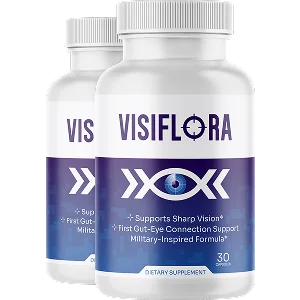
VisiFlora
Its listed ingredients include astaxanthin, vitamins C and E, grape seed extract, ginkgo biloba and eyebright, among others. The sources reviewed for this page do not show that any of them help with presbyopia, and evidence for this topic is limited.
Listed ingredients: Astaxanthin, Vitamin C, Vitamin E, Copper, Selenium, Chromium
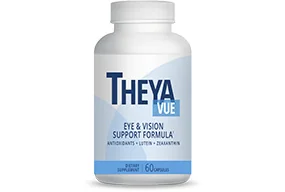
TheyaVue
Its listed ingredients include lutein, zeaxanthin, vitamins C and E, zinc and bilberry extract. Nothing in the sources reviewed here shows these ingredients correct presbyopia, so they should not be expected to replace glasses or other care from an eye doctor.
Listed ingredients: Lutein, Zeaxanthin, Vitamin C, Calcium, Vitamin E, Bilberry Extract
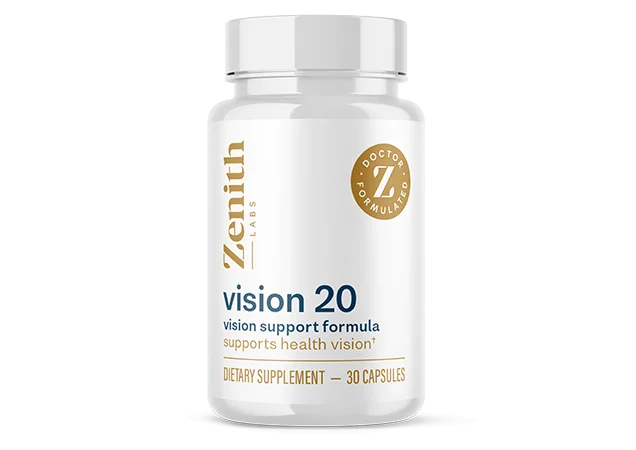
Vision 20
Its listed ingredients include lutein, zeaxanthin, zinc, beta-carotene, taurine and bilberry extract. The sources reviewed for this page do not support using any of them for presbyopia, and no good evidence is cited here for that purpose.
Listed ingredients: Lutein, Zeaxanthin, Zinc, Beta-carotene, Lycopene, Rose Hips
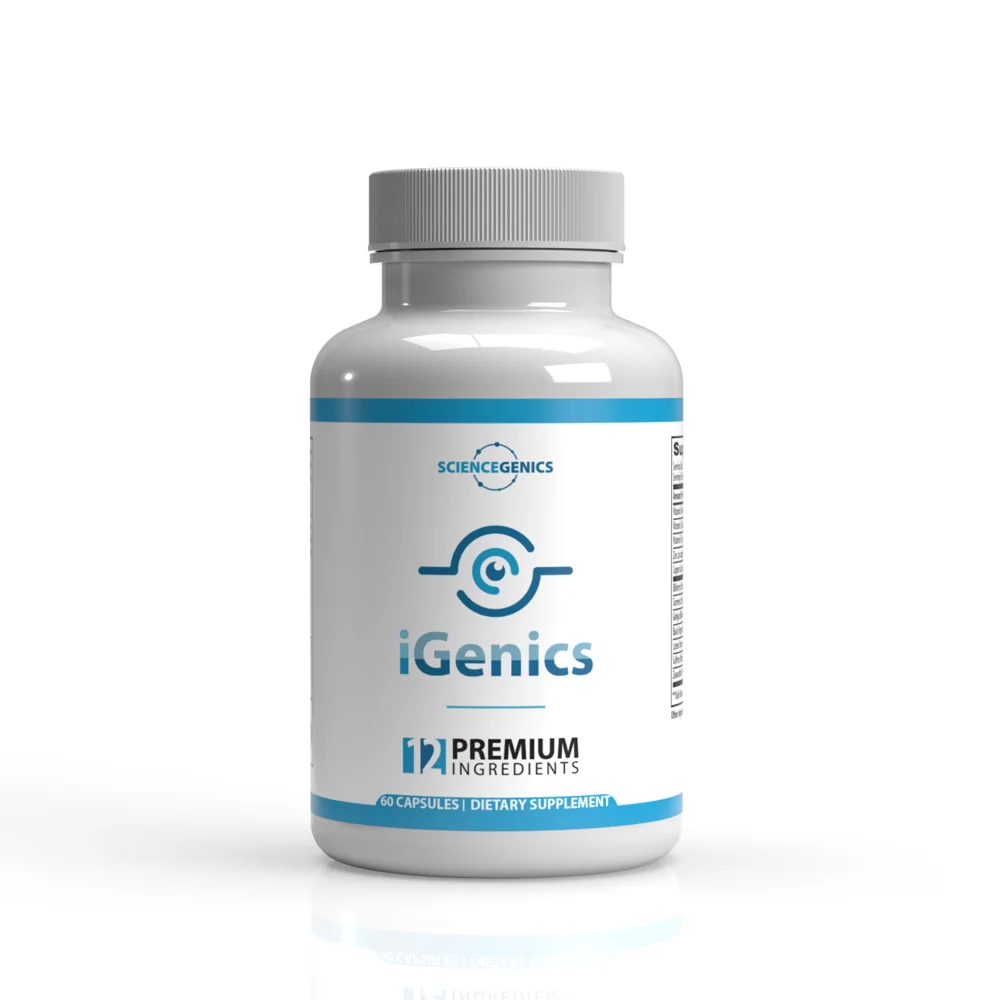
iGenics
Its listed ingredients include ginkgo biloba, bilberry, saffron, turmeric and an AREDS-2 style formula that is not itemized. The sources reviewed here do not show that any of these help with presbyopia, and the lack of an itemized formula makes it harder to judge.
Listed ingredients: Ginkgo biloba, AREDS-2 formula ingredients (not itemized), Bilberry, Saffron, Turmeric + BioPerine
Frequently asked questions
At what age does presbyopia usually start?
Many people first notice presbyopia in their early to mid 40s, when close reading becomes harder[1]. It tends to progress gradually for some years. An eye exam can confirm whether changes are due to presbyopia.
Can presbyopia be prevented?
Presbyopia is a normal part of aging, and no habit is known to prevent it[1]. Healthy habits such as regular eye exams, a nutritious diet and not smoking support overall eye health[4]. Corrective lenses or other options can then address the blurry near vision.
Do supplements help with presbyopia?
The sources used for this page do not show that supplements correct presbyopia, and evidence is limited. A balanced diet is part of general eye care[4]. Anyone considering a supplement should talk with a doctor first.
Is presbyopia the same as farsightedness?
No. Presbyopia is tied to age-related changes in the lens, while farsightedness is a refractive error linked to how the eye focuses light[2][1]. The two can occur together, so an eye doctor can sort out which applies.